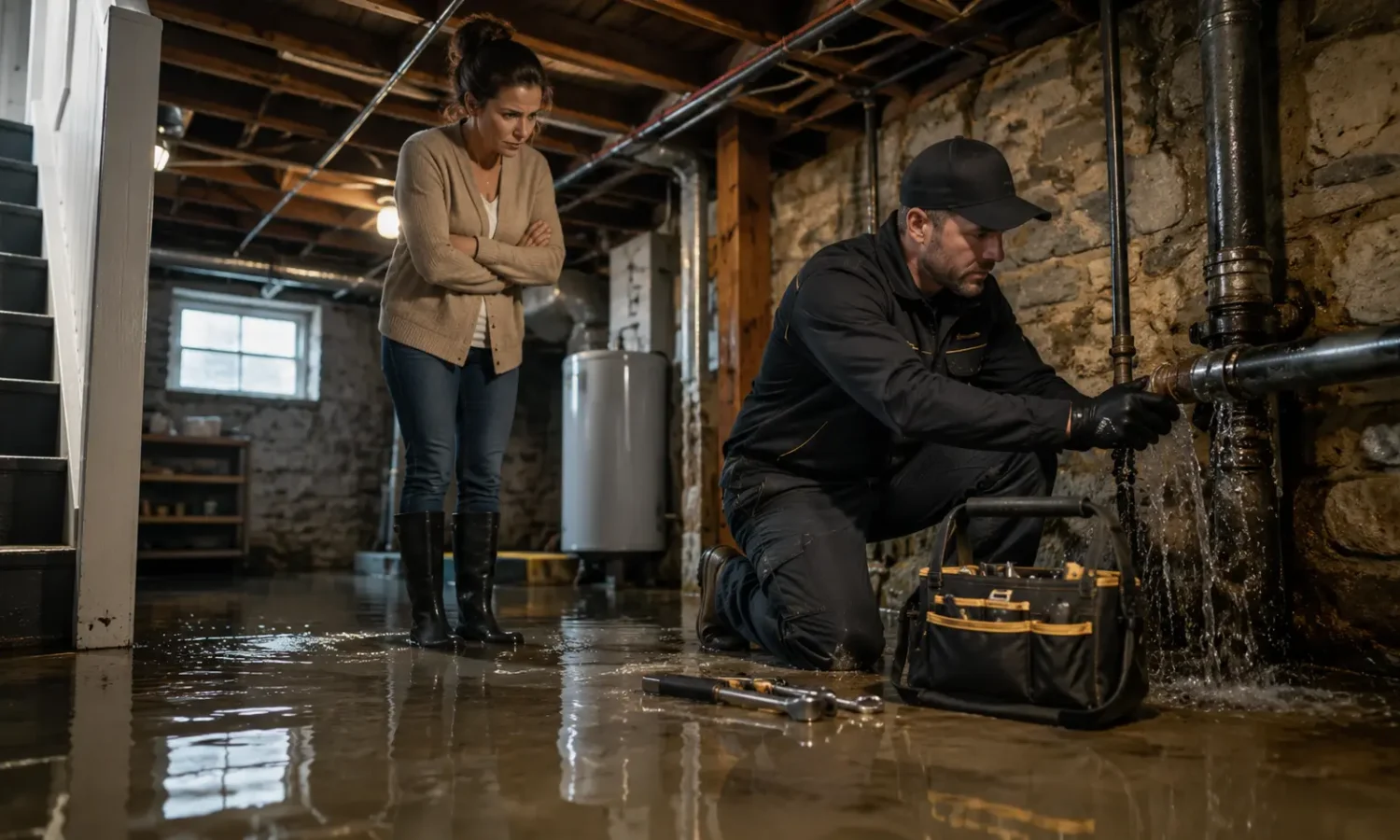
Water is spreading across your kitchen floor. Do you grab towels first, or your phone? Most homeowners freeze in that exact moment, and honestly, that hesitation is what turns a ₹2,000 fix into a ₹20,000 one. Learning to recognize the real emergency plumber signs — versus the stuff that can wait till Monday — saves you money, stress, and sometimes your ceiling.
Not every leak is an emergency. But some absolutely are, and knowing the difference matters more than people realize. This guide breaks down the emergency plumber signs worth acting on immediately, in 2026 and every year after, plus a few situations where you can reasonably take a breath first.
Water Gushing or Pooling Where It Shouldn’t Be
Quick answer: Continuous water flow that won’t stop, or water pooling in a place it’s never pooled before, is one of the clearest emergency plumber signs. Shut off your main water valve immediately, then call — don’t wait to see if it “settles.”
I’ve seen this go two ways. Someone notices a small puddle, mops it up, and goes to bed assuming it’ll be fine. By morning, there’s water damage under the flooring and a soggy patch on the ceiling below. The other version: someone shuts the main valve the second they spot it, calls a plumber that night, and the damage stops at “annoying” instead of “expensive.”
Here’s what actually counts as an emergency versus what doesn’t:
- A tap dripping slowly — not an emergency, can wait.
- A pipe joint actively spraying water — emergency, shut the valve now.
- A slow, growing damp patch on a wall — worth investigating same-day, not necessarily a 2 AM call.
- Water actively flowing from a fixture with no way to stop it locally — definite emergency.
Knowing where your main shutoff valve is located, before anything goes wrong, is honestly one of the most underrated pieces of home maintenance advice out there. Go find it right now if you don’t already know.
Sewage Smell or Backup in Drains
A sewage smell coming from your drains isn’t just unpleasant — it usually means something’s actually blocked deep in your main line, not just the sink trap.
Quick answer: A strong sewage odor combined with slow drainage across multiple fixtures (not just one sink) points to a main line blockage, and that’s a genuine emergency plumber situation, since sewage backup can contaminate your home and pose a health hazard.
Signs to watch for together, not in isolation:
- Multiple drains gurgling or draining slowly at the same time.
- A persistent sewage smell that air fresheners don’t fix.
- Water backing up into a lower fixture (like a bathtub) when you flush a toilet.
That combination means the problem isn’t your sink — it’s somewhere in the shared line, and that’s genuinely beyond what a plunger or a bottle of drain cleaner will solve.
No Water at All, Suddenly
Total loss of water pressure across the entire house, with no maintenance notice from your municipal supplier, is worth investigating right away. It could mean a burst pipe somewhere between the meter and your home, which is losing water (and money) the whole time it goes unnoticed.
Before calling anyone, check two things quickly: has your building’s water tank actually run dry, and has the local municipal corporation announced a supply cut for your area? Sometimes it really is that simple. But if neither applies and the water just vanished, that’s when it becomes one of the more urgent emergency plumber signs to act on.
Gas Smell Near a Water Heater or Geyser
This one’s non-negotiable, and there’s no “wait and see” version of it.
Quick answer: If you smell gas anywhere near your geyser or water heater, leave the house immediately, do not turn on lights or switches, and call your gas provider’s emergency line first, followed by a plumber. This is a safety emergency, not just a plumbing one.
I want to be blunt here: don’t try to “check it yourself” by getting closer to sniff around, and don’t flip a switch to see the pipe better. Get out, get fresh air, then make the calls. A slow gas leak has caused real accidents in Indian homes, and it’s simply not worth the risk of waiting even an hour to be sure.
Frozen or Burst Pipes (Yes, Even in India)
This surprises people, but certain parts of North India — Himachal, parts of Rajasthan on unusually cold nights, hill stations — do see pipes freeze and crack in peak winter.
A cracked pipe from freezing won’t necessarily leak right away. Often the real trouble starts when the ice inside melts and water starts pushing through the crack under normal pressure. Picture a homestay owner in a hill town near Manali who closes up a few rooms for winter — if a supply pipe freezes and cracks unnoticed, the actual flooding only shows up weeks later when temperatures rise and the guests come back. That’s a classic case where the damage happens invisibly, and by the time it’s discovered, the emergency plumber signs are unmistakable — stained ceilings, warped flooring, the whole mess.
Toilet Won’t Stop Overflowing
A toilet that overflows once and stops is annoying but manageable. A toilet that keeps overflowing no matter what you do is a different story entirely.
Quick answer: If a toilet overflows repeatedly even after plunging, and the water keeps rising rather than draining, shut off the water supply valve behind the toilet immediately — this is one of the more urgent emergency plumber signs, especially in homes with only one working bathroom.
A few quick things to try before you call:
- Locate the small shutoff valve on the wall behind the toilet and turn it clockwise to stop the supply.
- Don’t keep flushing — that just adds more water to an already full bowl.
- If it’s overflowing onto tile flooring, mop as you go to avoid slip hazards for kids or elderly family members in the house.
If shutting the valve doesn’t stop the rising water, or the blockage is clearly further down the line, that’s the point where a plumber with proper equipment (a motorized auger, for instance) is genuinely necessary.
Unusual Noises From Pipes or Water Heater
Loud banging, knocking, or a rattling sound every time you turn a tap on or off shouldn’t be brushed aside, especially if it’s new or getting worse.
Occasional light knocking (water hammer) is usually harmless and fixable on your own. But a loud, sudden bang followed by reduced pressure or a visible leak nearby? That combination suggests a fitting has actually failed somewhere in the wall or ceiling, and it’s worth having someone look at it sooner rather than later — before “later” becomes “there’s water coming through the light fixture.” [link to related guide on noisy pipe fixes here]
Visible Mold or Water Stains That Are Spreading
Has this ever happened to you — a small brown stain on the ceiling that you keep meaning to “look into” and it just… grows?
That growth is the tell. A static, old water stain that hasn’t changed in months is probably from a past issue that’s already resolved. A stain that’s visibly larger than it was last week means there’s an active leak feeding it right now, somewhere behind the wall or ceiling, and that qualifies as one of the more urgent emergency plumber signs even without any visible dripping. [link to related guide on detecting hidden pipe leaks here]
Frequently Asked Questions
How much does an emergency plumber cost in India compared to a regular visit? Emergency or after-hours callouts typically run 1.5 to 2 times the standard visit fee — so if a regular visit costs ₹500-₹800, expect ₹1,000-₹1,500 for an emergency night call. It varies a lot by city and how far the plumber has to travel.
Can I just turn off the main water valve and wait until morning? For most non-gas-related emergencies, yes, actually — shutting the main valve stops the damage from getting worse, and a lot of plumbers do charge less for a same-day morning visit versus a middle-of-the-night one. Gas smells are the one exception where you shouldn’t wait at all.
What’s the difference between a plumbing emergency and something that can wait? The real test is whether the situation is actively getting worse by the minute. A slow drip waits. Water pooling, gas smells, sewage backups, and overflowing fixtures don’t.
Should I try to fix a burst pipe myself before the plumber arrives? Don’t attempt a repair, but you can absolutely reduce damage — shut off the main valve, move furniture and electronics away from the water, and use towels or a mop to contain spreading water while you wait.
Is a gurgling drain always a sign of an emergency? Not always, no. One gurgling sink drain on its own is often just a minor air pocket issue. Gurgling across multiple drains at once, especially paired with slow drainage or odor, is the combination that actually signals a bigger problem.
How do I find a reliable emergency plumber quickly? Save a trusted plumber’s number in your phone before you need it — asking neighbours or checking local community groups works better than a random search at 11 PM. [link to related guide on finding a reliable plumber near you here]
Wrapping Up
Most plumbing problems can wait until a convenient hour. But the real emergency plumber signs — active flooding, sewage backup, gas smells, or a toilet that won’t stop rising — genuinely can’t. Knowing your main shutoff valve’s location and keeping a trusted plumber’s number saved ahead of time turns a potential disaster into a manageable Tuesday-night inconvenience.
The next time you spot water where it shouldn’t be, don’t stand there deciding whether it’s “bad enough” to call someone. Shut the valve, make the call, and let the professional make that judgment call instead of guessing at 1 AM yourself.