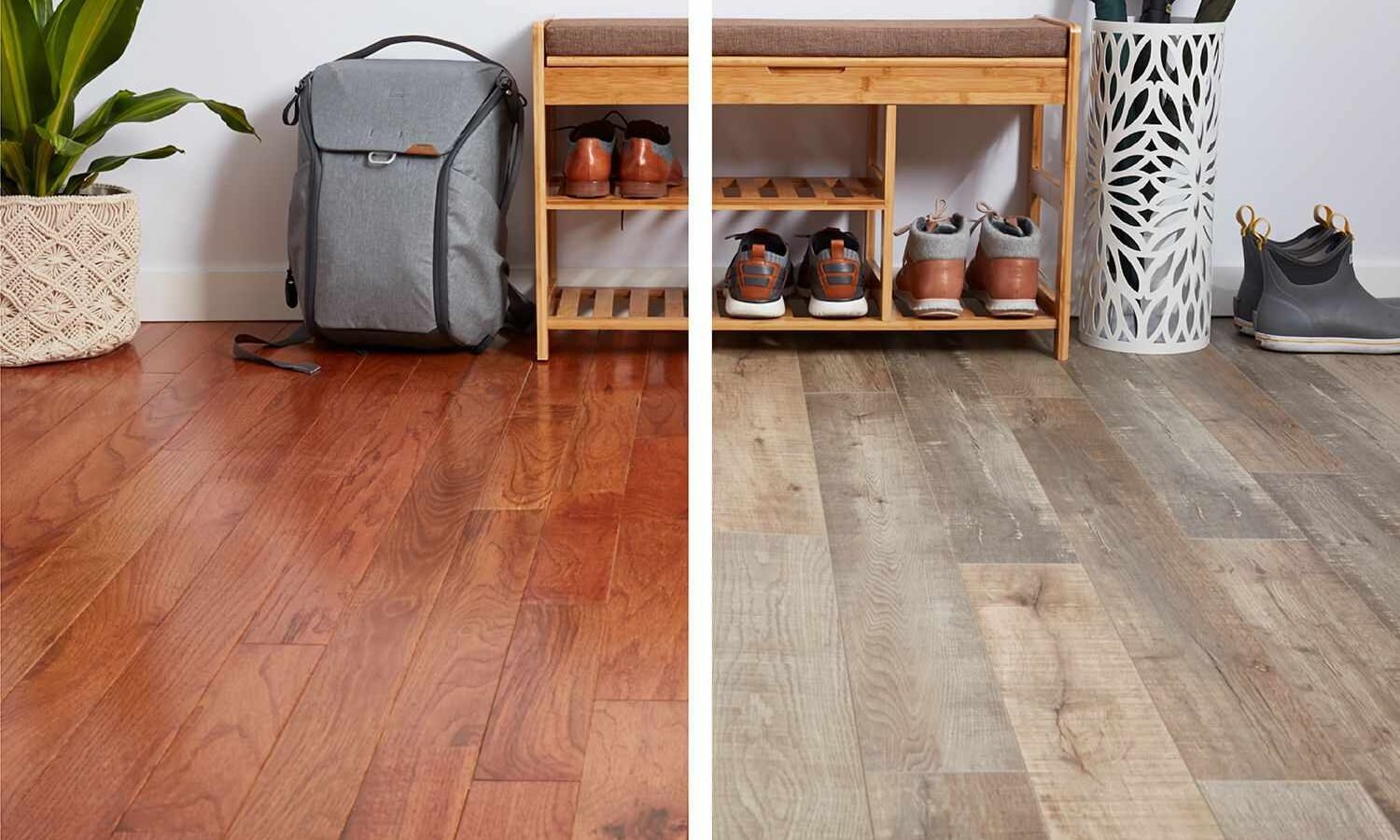
Standing in a flooring showroom, running your hand over sample after sample, and still no closer to a decision? That’s basically where most people land in the hardwood vs laminate flooring debate. Both look great in photos. Both have loyal fans who’ll swear one is objectively better. The truth, annoyingly, is that neither is universally “better” — it depends on your rooms, your budget, and honestly, how much upkeep you’re willing to do.
I’ve installed both in different homes over the years, and I’ve got opinions. Strong ones. This isn’t going to be a wishy-washy “it depends on you!” article — I’ll tell you exactly where each one shines and where it’ll let you down.
What’s the Real Difference Between Hardwood and Laminate?
> Featured snippet: Hardwood flooring is made entirely of solid wood, offering natural grain and long-term value but requiring more care. Laminate flooring is a synthetic product with a photographic wood-look layer over fiberboard — cheaper, more scratch-resistant, but not repairable the way real wood is.
Hardwood is exactly what it sounds like — solid planks cut from actual trees like oak, teak, or walnut. Every plank has its own grain pattern, its own little imperfections. No two floors look identical, which some people love and others find inconsistent.
Laminate, on the other hand, is a bit of a magic trick. It’s a high-resolution image of wood grain, laminated under a tough protective layer, sitting on top of compressed fiberboard. Good laminate today fools most people at first glance — I’ve had guests genuinely ask if my laminate floor was real teak.
The core distinction that matters most, though, isn’t looks. It’s what happens over the next 15-20 years. Hardwood can be sanded and refinished multiple times. Laminate, once it’s worn out or damaged, generally needs full replacement. That single fact should probably influence your decision more than anything else in this article.
Cost Comparison: Hardwood vs Laminate Flooring in India
Money talks, so let’s just get into it. This is usually the deciding factor for most homeowners, and there’s no point pretending otherwise.
Solid hardwood in India typically runs ₹400 to ₹1,200+ per sq ft depending on the wood species — teak sits at the premium end, while options like mango wood or acacia come in more affordable. Add installation costs, and you’re easily looking at ₹500-1,500 per sq ft all-in.
Laminate flooring is a different story entirely:
- Budget laminate: ₹80-150 per sq ft
- Mid-range laminate (better wear layer, thicker core): ₹150-300 per sq ft
- Premium laminate (waterproof core, realistic textures): ₹300-450 per sq ft
For a 1,000 sq ft home, that’s a gap of roughly ₹3-4 lakh between a decent laminate job and a mid-tier hardwood installation. That’s not pocket change for most families, and it’s honestly the number one reason laminate wins out in Indian homes right now.
Here’s something worth remembering though — hardwood adds resale value in a way laminate simply doesn’t. Real estate agents in markets like Delhi and Mumbai will tell you buyers notice and pay for solid wood floors. Laminate doesn’t carry that same weight.
Durability: Which Flooring Actually Lasts Longer?
> Featured snippet: Laminate resists scratches and dents better day-to-day thanks to its tough wear layer, but hardwood wins long-term because it can be refinished repeatedly. A well-maintained hardwood floor can outlast three or four laminate installations over the same period.
This is where the hardwood vs laminate flooring debate gets genuinely interesting, because the answer flips depending on your timeline.
Short term — say, the first 5-7 years — laminate often performs better. It resists scratches from pet claws, doesn’t dent easily under furniture legs, and handles daily abuse without much drama. I’ve seen laminate in a busy joint-family living room hold up better than I expected, honestly.
Long term, hardwood pulls ahead. Scratches and dullness that would kill a laminate floor can just be sanded out of hardwood and refinished to look brand new. I know a family in Pune who refinished their 25-year-old teak floor last year — it looks better now than plenty of new installations I’ve seen.
One caveat: hardwood does dent under heavy impact (dropped kitchen equipment, stiletto heels, that sort of thing), and those dents are trickier to fix than scratches. So “durable” isn’t a single simple answer here — it depends what kind of damage you’re worried about.
Maintenance Requirements: Daily Care and Long-Term Upkeep
Nobody enjoys thinking about maintenance until it’s too late, but this genuinely should factor into your decision before you commit.
Hardwood needs a bit of babying. Avoid excess water — mopping with a damp (not wet) cloth is the rule, never a soaking one. Direct sunlight fades and can slightly warp certain wood types over years, so curtains or UV-filtering window film help. Refinishing every 7-10 years keeps it looking sharp, and that’s a real cost to budget for.
Laminate is refreshingly low-maintenance by comparison. A dry mop or a barely-damp cloth handles most day-to-day cleaning. No polishing, no refinishing, no sealing required. That said, standing water is laminate’s biggest enemy — a spill left overnight can cause swelling at the seams that’s basically impossible to reverse.
Quick maintenance comparison:
- Daily cleaning — laminate wins, it’s simpler and faster
- Water damage recovery — hardwood wins, it can often be dried and saved
- Long-term restoration — hardwood wins, refinishing extends life dramatically
- Cost of upkeep over 10 years — laminate wins, almost no ongoing spend
Moisture and Water Resistance: A Critical Factor for Indian Homes
Given how much of India deals with monsoon humidity, this section probably deserves more attention than most flooring guides give it.
Hardwood and water genuinely don’t mix. Excess humidity causes planks to expand, contract, cup, or warp over time — and once that happens, repair options get limited fast. If you live somewhere coastal, like Mumbai or Kochi, solid hardwood in ground-floor rooms needs serious thought before installation.
Laminate isn’t naturally waterproof either, contrary to what some sales pitches suggest, but the newer generation of “water-resistant” and fully waterproof laminate has genuinely improved. These use a different core material (often WPC or SPC) that resists swelling even with occasional spills or humidity spikes.
Picture a family in Kochi renovating a ground-floor flat that floods slightly during heavy monsoons — hardwood there would be a costly mistake within a couple of years. Waterproof laminate or vinyl plank makes far more sense for that specific situation.
[link to related guide on waterproof flooring options here]
Installation Process: What to Expect With Each
Installation timelines and hassle differ more than people expect going in.
Hardwood installation is a proper job — it typically requires professional fitting, acclimatization of the wood to your home’s humidity for several days before laying, and it can take anywhere from 3 to 7 days for an average home depending on square footage. Nail-down or glue-down methods each have their own prep requirements too.
Laminate, by contrast, is famous for its “click-lock” installation systems. Many contractors can finish a mid-sized room in a single day. Some genuinely handy homeowners even DIY it, though I’d still recommend a professional for corners, transitions, and doorways — those spots are where amateur installs usually go wrong.
Aesthetic and Resale Value: Does It Really Matter?
> Featured snippet: Hardwood generally adds more resale value than laminate because buyers perceive it as a premium, long-term investment. Laminate offers similar visual appeal at a fraction of the cost but doesn’t carry the same weight during property valuations or buyer negotiations.
Here’s my honestly slightly controversial opinion: for day-to-day living, most people can’t tell the difference between good laminate and real hardwood from a few feet away. The visual gap has closed a lot in the last decade.
But resale is a different conversation entirely. Buyers and agents both tend to associate solid wood flooring with quality construction and long-term investment, even if they can’t always spot it correctly. If you’re planning to sell within 5-10 years, that perception genuinely affects your asking price.
If this is your forever home and you’re not chasing resale numbers, I’d lean toward whichever fits your budget and lifestyle better — the aesthetic gap just isn’t worth stressing over anymore.
Environmental Impact: A Factor Worth Considering
Not everyone weighs this, but it’s becoming more relevant, especially with sustainability-conscious buyers.
Solid hardwood, sourced responsibly (look for FSC certification), is a renewable material and biodegrades eventually. The catch is deforestation concerns with certain species, so sourcing matters a lot here — don’t just buy the cheapest teak without asking where it came from.
Laminate is made mostly from wood byproducts and resins, which sounds efficient on paper, but it’s not biodegradable and typically ends up in landfill once replaced. If sustainability genuinely matters to your decision, hardwood from a certified source usually edges out laminate.
[link to related guide on eco-friendly flooring materials here]
FAQs About Hardwood vs Laminate Flooring
Q: Is laminate flooring as good as hardwood? Not exactly “as good,” but it’s a legitimate alternative depending on priorities. Laminate wins on cost and low maintenance; hardwood wins on longevity and resale value. Neither is objectively superior — it’s about matching the material to your situation.
Q: Can laminate flooring get wet? Standard laminate handles light moisture poorly and can swell if water sits too long. Newer waterproof laminate (WPC or SPC core) handles spills and humidity far better, so check the specs before buying if this matters to you.
Q: How long does hardwood flooring last compared to laminate? Hardwood can last 50-100 years with proper care and periodic refinishing. Laminate typically lasts 15-25 years before it needs replacing, depending on quality and foot traffic.
Q: Which is cheaper, hardwood or laminate flooring? Laminate is significantly cheaper upfront, usually costing a third to half of what solid hardwood costs per square foot in India. Hardwood costs more initially but can add resale value that partially offsets the price gap.
Q: Does laminate flooring scratch easily? Not really — laminate’s wear layer is actually quite scratch-resistant, often more so than hardwood in daily use. Deep gouges are still possible, but they’re less common than with softer wood species.
Q: Can you install laminate over hardwood flooring? Generally yes, if the existing hardwood is flat, dry, and structurally sound. A thin underlayment is usually recommended, though it’s worth getting a contractor to inspect the subfloor condition first.
Final Thoughts
There’s no universal winner in the hardwood vs laminate flooring debate — and honestly, anyone who tells you there is probably hasn’t lived with both. Hardwood brings longevity, resale value, and a certain warmth that’s hard to fake. Laminate brings affordability, easier upkeep, and genuinely impressive looks for the price.
If your budget’s tight or you’re dealing with a rental or a home you might sell soon, laminate is the practical call. If this is a forever home and you can stretch the budget, hardwood tends to pay for itself over decades.
Whichever way you lean, get samples home first and live with them under your actual lighting for a few days before committing — showroom lighting flatters everything, and that’s exactly the trap to avoid. [link to related guide on flooring installation costs here]